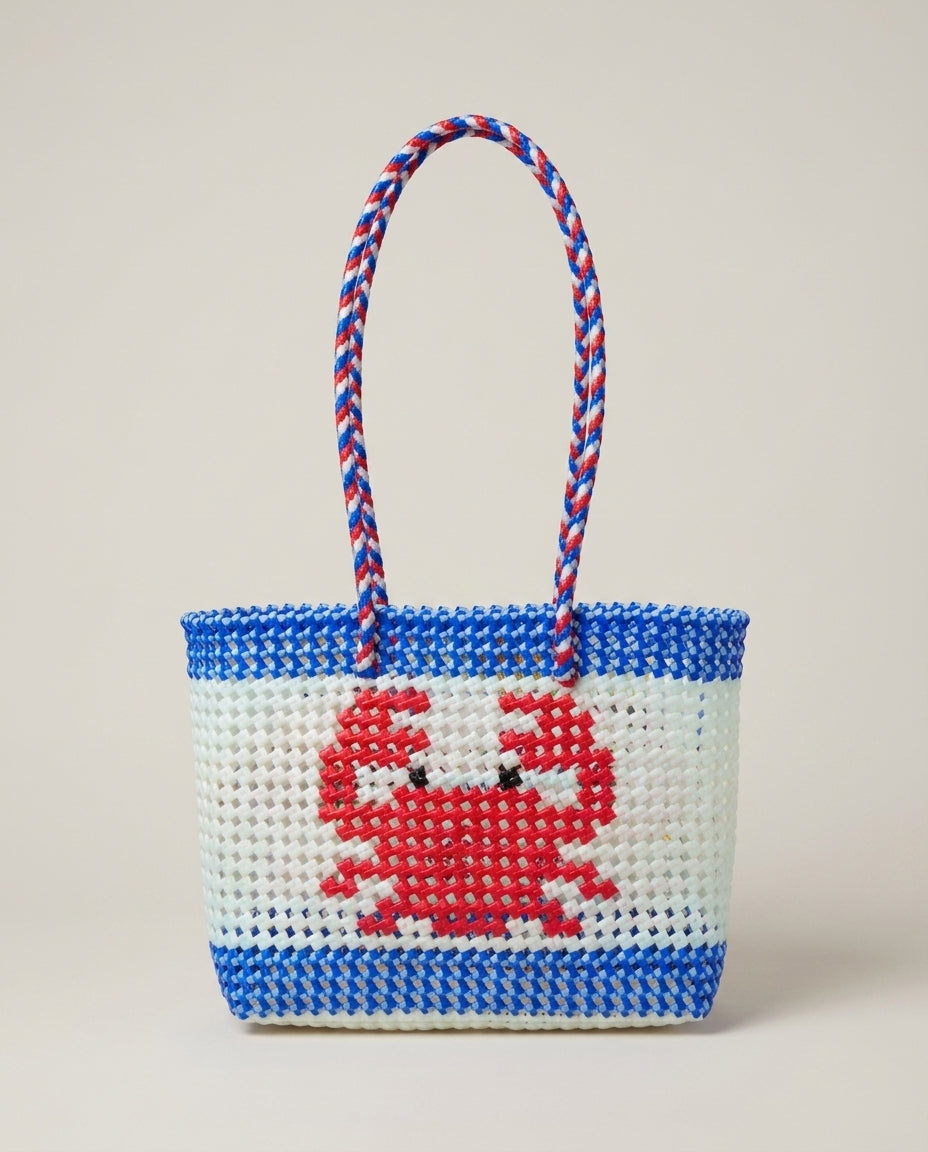
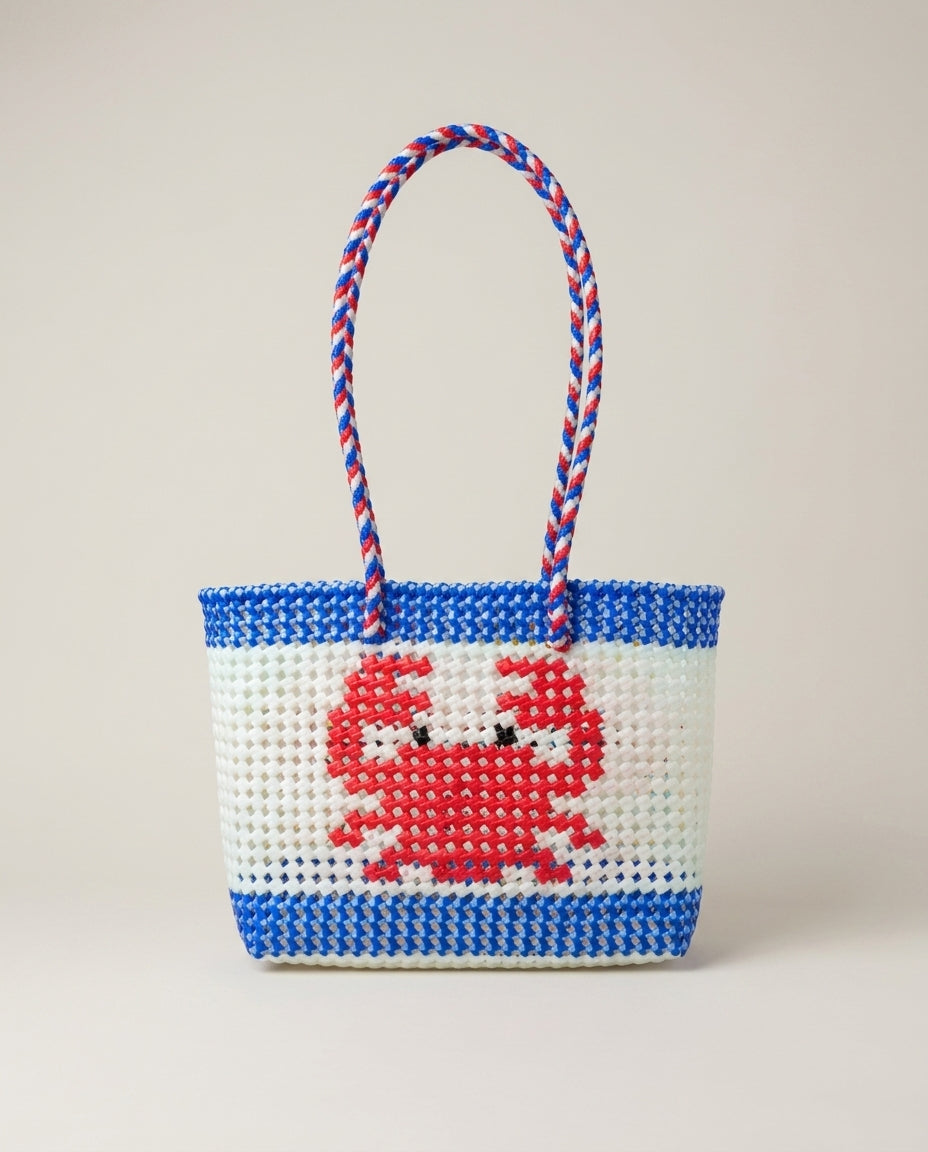
The Koodai Tote — Crabby
- Regular price
-
£55.00 - Regular price
-
- Sale price
-
£55.00
-
Availability
-
Only 1 item left in stock
Koodai. Tamil for basket.
Not a design object. Not a fashion statement. A bag. The kind that has sat in South Indian kitchens for generations — brightly coloured, sturdy, completely ordinary. It carried tiffin boxes to school. Vegetables from the market. Snacks to the beach. It was held by grandmothers, passed between neighbours, learned by watching rather than teaching.
And then, quietly, it began to disappear.
The wire is plastic. That is not an accident and it is not a compromise.
Long before any brand entered the picture, the women who made koodais made a practical decision — palm leaf gave way to plastic wire because it lasted longer, cleaned more easily, and suited the rhythms of modern life. The craft evolved on its own terms. What was preserved was not the material. It was the knowledge. The weaving pattern. The hands.
This is not single-use plastic. Every strand is woven by hand, over hours, into something built to be carried for years.
For generations, koodai weaving moved the way all living knowledge moves — daughters watching mothers, neighbours watching neighbours. When community structures shifted and younger generations moved toward other kinds of work, that knowledge grew fragile. It found shelter in an unexpected place: welfare homes and rehabilitation centres, where weaving had quietly become a form of occupational therapy. The craft survived not in a museum. In hands. In practice. In women who kept going.
One woman remembers a technique. Another remembers a pattern. Slowly, the knowledge becomes collective again.
That is what you are holding.
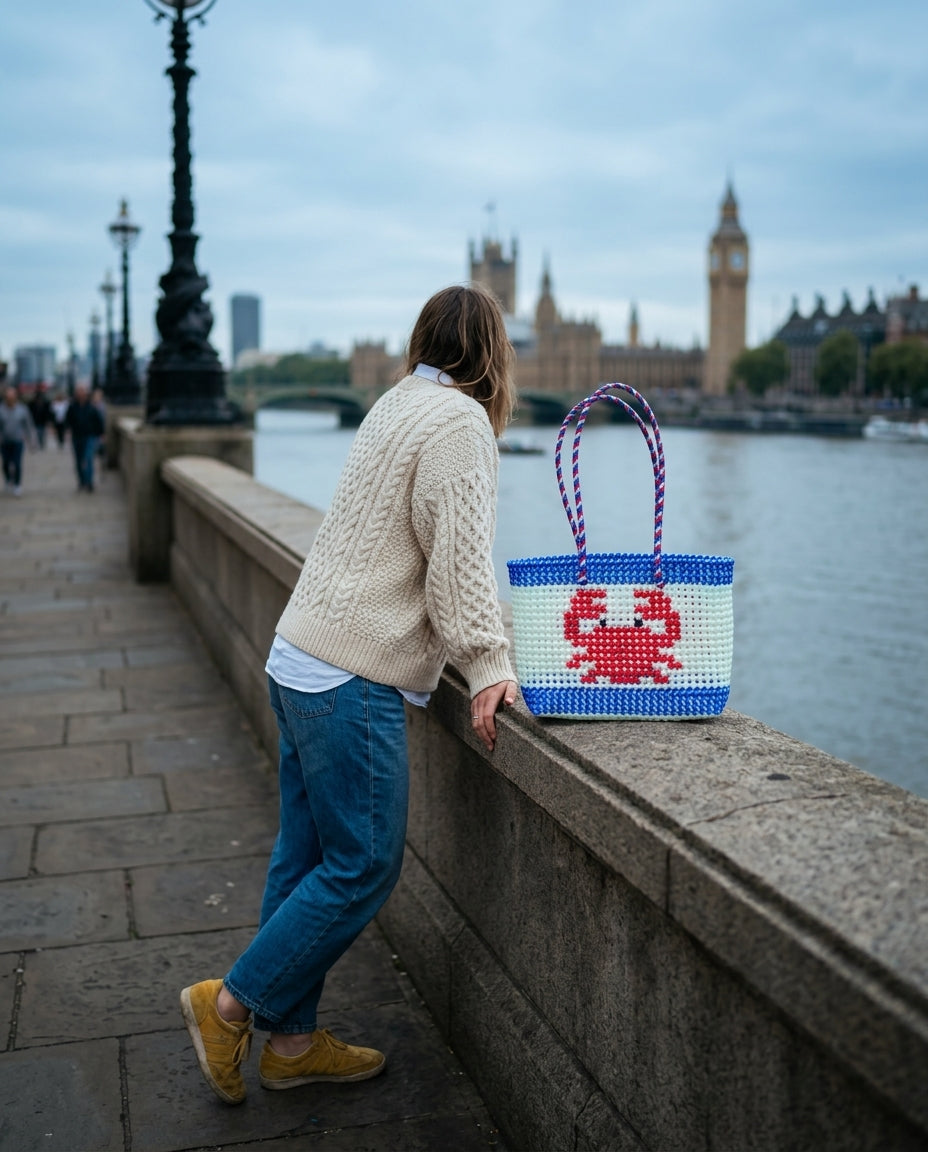
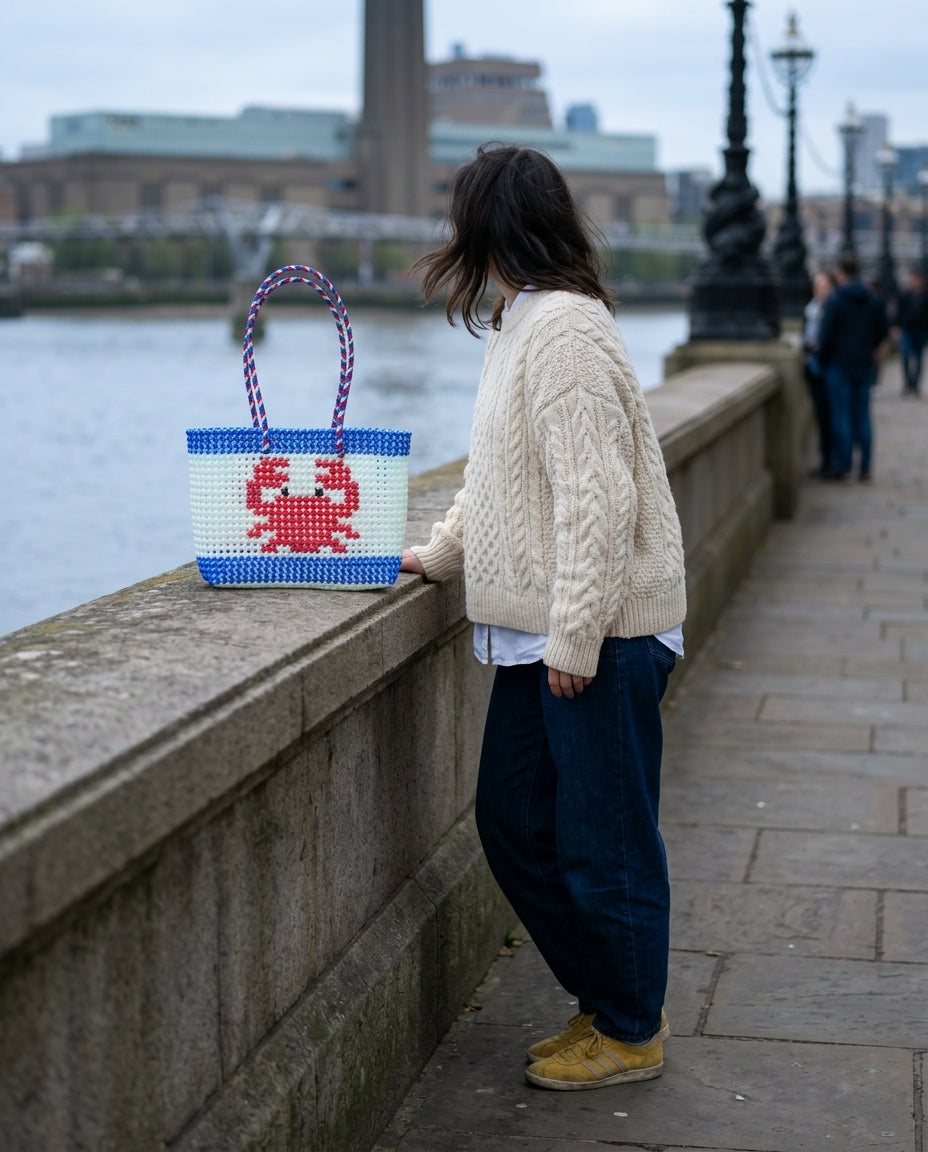
Carry it to the farmers' market. The school run. The beach.
Buy it because it is beautiful. Because it is useful. The social story is real. But it is not the reason to buy it.
The reason to buy it is that it is extraordinary.
No factories. No machines. Ever.
Couldn't load pickup availability
Product Highlights
Care Instructions